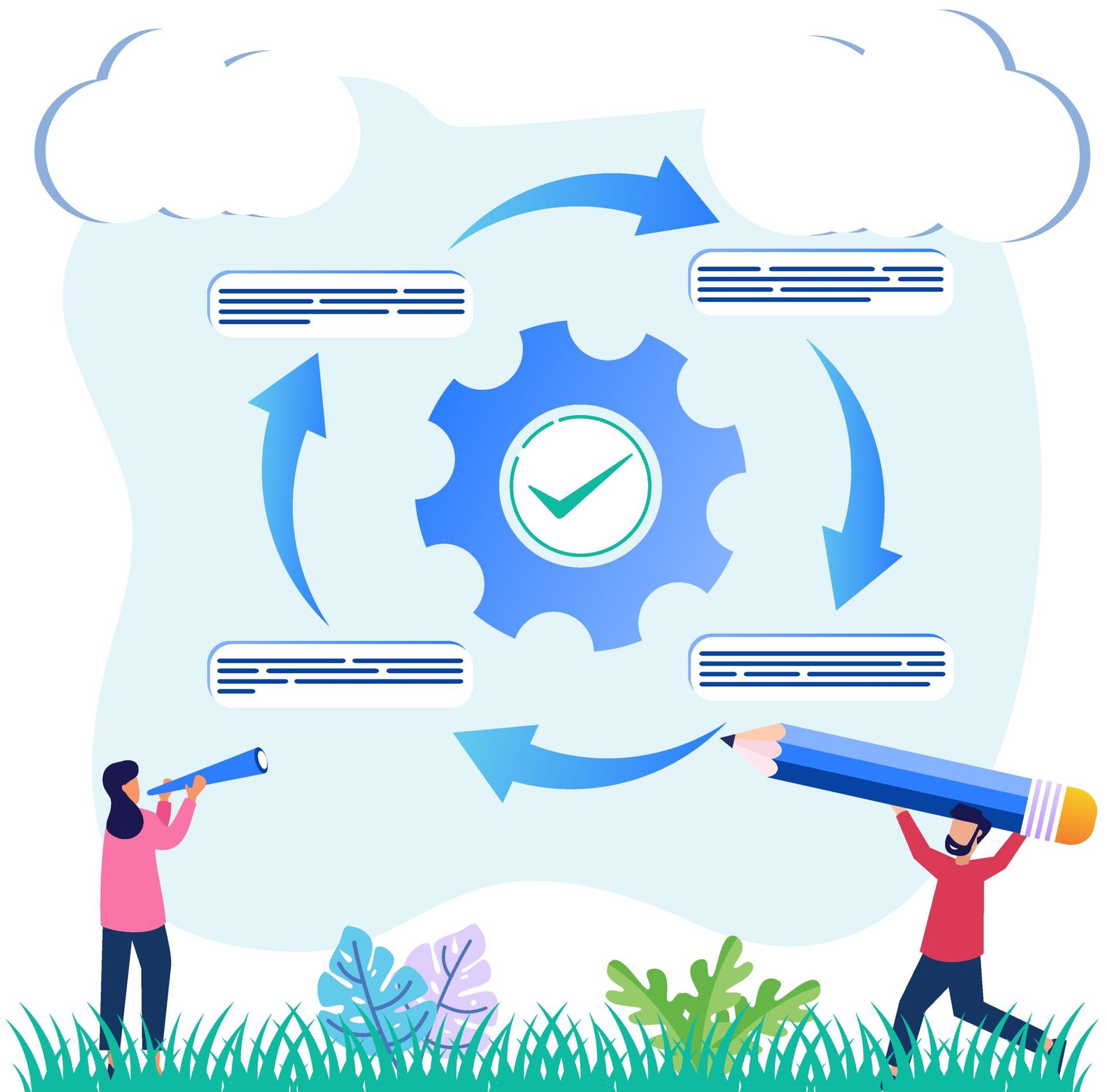
The software testing life cycle (STLC) is a structured framework of sequential phases—planning, design, execution, reporting, and closure—that ensures systematic quality assurance. Organizations following STLC deliver 40% fewer production defects and reduce testing rework by 35% through disciplined phase-gate processes.
The software testing life cycle (STLC) is a sequential framework of five phases — planning, design, execution, reporting, and closure — that brings discipline and repeatability to quality assurance. Teams that follow STLC consistently catch defects earlier, reduce rework, and ship software with measurably higher reliability.
Table of Contents
- Introduction
- What Is the Software Testing Life Cycle?
- Why Organizations Need a Structured Testing Framework
- The 5 Phases of the Software Testing Life Cycle
- STLC Phase Deliverables
- STLC in Different Methodologies
- Tools for Each STLC Phase
- Real Implementation: SaaS Company
- Benefits of Following STLC
- Common STLC Challenges and Solutions
- STLC Implementation Checklist
- Frequently Asked Questions
- Conclusion
Introduction
Every development team tests its software, but not every team tests it well. Ad-hoc testing — running through features without a plan, logging defects in scattered spreadsheets, and declaring the product "ready" based on gut feeling — creates a false sense of confidence. Critical paths go unvalidated, regression defects slip through, and production incidents consume time that should go toward building new features.
The root cause is not a lack of effort but a lack of structure. When testing has no defined phases, no entry and exit criteria, and no measurable deliverables, quality becomes unpredictable. The software testing life cycle solves this problem by providing a repeatable framework that turns testing from an afterthought into an engineering discipline.
This guide walks through every STLC phase with concrete examples, deliverables, tools, and implementation advice drawn from real-world projects. Whether you are building your first test organization or refining an existing one, the principles here apply across industries, team sizes, and development methodologies.
What Is the Software Testing Life Cycle?
The software testing life cycle is a structured sequence of phases that govern how testing is planned, designed, executed, evaluated, and concluded. Each phase has defined entry criteria, activities, deliverables, and exit criteria that create clear checkpoints throughout the process.
Unlike ad-hoc testing, STLC treats testing as a process with inputs and outputs at every stage. It operates within the broader software development life cycle (SDLC) but focuses exclusively on quality assurance activities. While SDLC covers the entire journey from requirements through deployment, STLC provides granular control over how quality is verified at each step.
For a deeper comparison of STLC models and terminology, see our companion article on STLC phases and processes.
Want deeper technical insights on testing & automation?
Explore our in-depth guides on shift-left testing, CI/CD integration, test automation, and more.
Also check out our AI-powered API testing platformWhy Organizations Need a Structured Testing Framework
The difference between structured and unstructured testing is measurable. Industry data from QA organizations consistently shows that teams adopting formal STLC processes achieve significant improvements across key metrics:
- 40% fewer production defects — Structured test design catches issues that ad-hoc testing misses because every requirement maps to at least one test case through traceability matrices.
- 35% reduction in testing rework — Clear exit criteria prevent premature phase transitions. Teams stop wasting cycles on retesting work that was never properly designed.
- 25% better resource utilization — Test planning allocates people, environments, and tools before execution begins, eliminating the scramble that occurs when testing starts without preparation.
- 50% faster root-cause analysis — Documented test results with traceability back to requirements make it straightforward to identify which changes introduced which defects.
Beyond metrics, STLC provides a common language for communication between QA teams, developers, product managers, and stakeholders. When everyone understands what "test planning complete" means in terms of deliverables and exit criteria, status reporting becomes objective rather than subjective.
The 5 Phases of the Software Testing Life Cycle
Phase 1: Test Planning
Test planning establishes the foundation for every testing activity that follows. During this phase, the test lead or test manager defines the scope of testing, identifies risks, selects testing approaches, estimates effort, allocates resources, and creates the test schedule.
Entry criteria: Requirements documents or user stories are available and reviewed. Project timelines are established.
Key activities:
- Define testing objectives and scope (what will and will not be tested)
- Identify testing types required (functional, performance, security, usability)
- Estimate effort and assign resources
- Define the test environment requirements
- Establish risk mitigation strategies
- Create the test plan document
Exit criteria: Approved test plan with sign-off from stakeholders.
Real-world example: A healthcare SaaS company preparing to test a patient portal identifies HIPAA compliance as a non-negotiable scope item. The test manager allocates two testers for security testing, schedules penetration testing with an external vendor, and documents that performance testing will cover 10,000 concurrent users. The test plan specifies all PHI-related test data must use synthetic records.
For a deep dive into this critical phase, read our guide on test planning fundamentals.
Phase 2: Test Design
Test design translates requirements into executable test artifacts. Testers analyze requirements, identify test conditions, create test cases, prepare test data, and build a requirements traceability matrix (RTM) that maps every requirement to its corresponding test cases.
Entry criteria: Approved test plan. Requirements or user stories are baselined.
Key activities:
- Analyze requirements to identify test conditions
- Design test cases with clear steps, expected results, and preconditions
- Prepare test data sets (valid, invalid, boundary, edge cases)
- Build and maintain the requirements traceability matrix
- Review test cases through peer review or walkthroughs
Exit criteria: Test cases reviewed and approved. RTM shows full requirements coverage.
Real-world example: For the same patient portal, a tester designing cases for appointment scheduling creates scenarios covering successful booking, double-booking prevention, timezone handling, and cancellation edge cases. Each scenario includes specific test data: patient IDs, provider schedules, and dates like daylight saving time transitions. The RTM confirms every acceptance criterion has at least two test cases.
Our article on test analysis and design covers techniques like equivalence partitioning and boundary value analysis in detail.
Phase 3: Test Execution
Test execution is where the team runs test cases against the software, compares actual results to expected results, and logs defects for any discrepancies. This phase consumes the most time and resources in the STLC and requires careful coordination between testers, developers, and environment administrators.
Entry criteria: Test environment is set up and verified. Test cases and test data are ready. The build under test is deployed and smoke-tested.
Key activities:
- Execute test cases (manual and automated) according to the test plan priority
- Log defects with reproducible steps, severity, and screenshots
- Retest fixed defects and perform regression testing
- Track test execution progress against the schedule
- Escalate blockers that prevent testing from continuing
Exit criteria: All planned test cases executed. Critical and high-severity defects resolved or have approved workarounds.
Real-world example: The QA team discovers the appointment scheduling API returns a 500 error when a patient books during a provider's lunch block overlapping a timezone boundary. The tester logs the defect with the exact API payload and server response. After the developer fixes the timezone calculation, the tester retests the original defect plus all related regression cases.
For execution strategies and automation integration, see test implementation and execution.
Phase 4: Test Reporting and Evaluation
Test reporting transforms raw execution data into actionable insights. The test lead compiles metrics, analyzes trends, assesses whether exit criteria have been met, and communicates quality status to stakeholders in a language they understand.
Entry criteria: Test execution is complete or has reached a predefined milestone.
Key activities:
- Compile test execution metrics (pass/fail rates, defect density, test coverage)
- Analyze defect trends by severity, module, and root cause
- Assess whether exit criteria from the test plan have been satisfied
- Prepare the test summary report for stakeholders
- Provide a go/no-go recommendation for release
Exit criteria: Test summary report delivered and reviewed by stakeholders. Release decision documented.
Real-world example: The patient portal test summary shows a 94% pass rate, with remaining failures limited to three low-severity cosmetic issues deferred to the next sprint. Defect density analysis reveals the notification module had 3x the defect rate of other modules, prompting a code review recommendation. Stakeholders issue a "go" decision with the cosmetic issues documented as known limitations.
Phase 5: Test Closure
Test closure wraps up the testing effort by archiving artifacts, documenting lessons learned, and ensuring that institutional knowledge is captured for future projects. This phase is often rushed or skipped entirely, but it is essential for continuous improvement.
Entry criteria: Software is released or the testing effort is formally concluded. All defects are closed or formally deferred.
Key activities:
- Archive test plans, test cases, defect reports, and test data
- Document lessons learned (what went well, what to improve)
- Evaluate test process metrics against initial estimates
- Identify reusable test assets for future projects
- Prepare the test closure report
Exit criteria: Test closure report approved. All artifacts archived in the designated repository.
Real-world example: During the closure retrospective, the team identifies that environment provisioning took 40% longer than estimated due to manual approval bottlenecks. The lesson learned produces an action item: implement infrastructure-as-code templates next quarter. The team also catalogs 150 reusable automated regression tests for the upcoming mobile app version.
For closure best practices and templates, refer to our guide on test closure activities.
STLC Phase Deliverables
| Phase | Key Deliverables | Primary Owner |
|---|---|---|
| Test Planning | Test plan, test strategy, risk assessment, resource plan, schedule | Test Manager / Test Lead |
| Test Design | Test cases, test scenarios, test data, RTM, review notes | Test Analysts / Senior Testers |
| Test Execution | Test execution logs, defect reports, regression results, daily status | Test Engineers / QA Team |
| Test Reporting | Test summary report, metrics dashboard, go/no-go recommendation | Test Manager / Test Lead |
| Test Closure | Closure report, lessons learned, archived artifacts, reusable assets | Test Manager / QA Lead |
STLC in Different Methodologies
The five STLC phases remain consistent regardless of methodology, but their timing, duration, and degree of overlap change significantly depending on whether the team follows Waterfall, Agile, or DevOps practices.
Waterfall STLC runs each phase sequentially after development is complete. Planning happens once, design happens once, and execution occurs in a single extended window. This works for regulated industries where requirements are stable and documentation must be exhaustive.
Agile STLC compresses all five phases into each sprint. Test planning happens during sprint planning, design occurs as stories are refined, execution runs throughout the sprint, and reporting happens at sprint review. Closure is deferred until the release boundary.
DevOps STLC pushes phases into the CI/CD pipeline. Test design becomes part of the definition of done for every pull request. Execution is automated and continuous. Reporting flows from pipeline telemetry dashboards. Shift-left practices accelerate this by moving testing as early as possible.
Tools for Each STLC Phase
| STLC Phase | Tool Category | Popular Tools (2026) |
|---|---|---|
| Test Planning | Test management, project planning | Jira, Azure DevOps, TestRail, Zephyr Scale, Xray |
| Test Design | Test case management, mind mapping | TestRail, qTest, Zephyr, XMind, PractiTest |
| Test Execution | Automation frameworks, manual execution | Selenium, Playwright, Cypress, Appium, TestComplete |
| Test Reporting | Dashboards, analytics | Allure, ReportPortal, Grafana, Power BI, TestRail |
| Test Closure | Knowledge management, archiving | Confluence, SharePoint, Notion, TestRail |
For organizations looking to unify STLC phases under a single platform with AI-driven test intelligence, Total Shift Left's platform integrates planning, execution, and reporting into one workflow.
Real Implementation: SaaS Company
A mid-sized B2B SaaS company serving 5,000 enterprise customers faced a recurring problem: production incidents were increasing 15% quarter over quarter despite growing their QA team. Testing was happening without structure — ad-hoc test cases, no traceability, and results reported in weekly emails.
What they implemented:
- Test Planning — Formal test plans for each quarterly release with scope, risk assessment, and effort estimates reviewed by engineering leadership.
- Test Design — Mandatory RTM for every feature. No test case executed without tracing back to an approved requirement.
- Test Execution — Daily QA standups during execution phases. Automated smoke tests on every build with time-boxed exploratory testing sessions.
- Test Reporting — Live dashboard replacing weekly email updates, showing pass rates, defect trends, and blockers in real time.
- Test Closure — Quarterly retrospectives producing three actionable improvement items tracked to completion.
Results after four quarters:
- Production incidents decreased by 45% (from 12 per quarter to 6-7)
- Test case reuse increased from 20% to 65% through archived test assets
- Defect resolution time dropped from 4.2 days to 1.8 days
- Go/no-go decisions took 30 minutes instead of two hours
Benefits of Following STLC
Adopting a structured software testing life cycle delivers compounding returns across quality, efficiency, and organizational maturity:
- Predictable quality outcomes — Entry and exit criteria at each phase create checkpoints that prevent premature advancement. Teams know exactly what "done" means at every stage.
- Reduced cost of defects — Defects found during test design (before a single test case runs) cost 5-10x less to fix than defects found in production. STLC front-loads defect discovery.
- Improved team productivity — When testers have clear test plans and designed test cases, they spend execution time testing rather than figuring out what to test.
- Stronger audit and compliance posture — Regulated industries (healthcare, finance, automotive) require documented evidence of testing activities. STLC produces that documentation as a natural byproduct.
- Better stakeholder communication — Standardized reporting and metrics give product owners and executives an objective view of quality rather than relying on subjective assessments.
- Institutional knowledge retention — Test closure artifacts ensure that lessons learned survive team turnover. New team members can review past test plans and closure reports to ramp up faster.
Common STLC Challenges and Solutions
Challenge: Test planning takes too long and delays execution. Solution: Use lightweight templates focused on scope, risks, and approach. In Agile contexts, a one-page test charter per sprint is sufficient.
Challenge: Requirements change mid-cycle, invalidating test designs. Solution: Build change management into your STLC. When requirements change, update the RTM first, then identify affected test cases. This keeps impact visible and manageable.
Challenge: Test environments are unreliable or unavailable. Solution: Adopt environment-as-code practices. Containerized environments (Docker, Kubernetes) provision in minutes rather than days, removing the most common execution blocker.
Challenge: Test reporting is ignored by stakeholders. Solution: Tailor reports to the audience. Executives need a one-page go/no-go summary. Engineering leads need defect density by module. One report does not fit all.
Challenge: Test closure is skipped because the team moves on. Solution: Schedule closure as a calendar event with sprint-ceremony priority. Allocate 2-4 hours per release and make closure a prerequisite for starting the next cycle.
STLC Implementation Checklist
Use this checklist to assess your organization's STLC maturity and identify gaps:
- ✔ Test plans exist for every release or sprint and include scope, risks, and resource allocation
- ✔ Test cases trace back to requirements through a maintained RTM
- ✔ Entry and exit criteria are defined for each STLC phase
- ✔ Test data is prepared and version-controlled before execution begins
- ✔ Defect reports follow a standardized template with reproduction steps, severity, and screenshots
- ✔ Test execution progress is tracked daily with automated or semi-automated dashboards
- ✔ Test summary reports are generated and reviewed at each milestone
- ✔ Go/no-go decisions are documented with supporting evidence from test metrics
- ✔ Lessons learned are captured after every release in a structured retrospective
- ✔ Test artifacts (plans, cases, reports) are archived in a searchable repository
- ✔ Reusable test assets are cataloged and accessible for future projects
- ✔ STLC process is reviewed and improved at least quarterly
Frequently Asked Questions
What are the phases of the software testing life cycle?
The STLC consists of five core phases: Test Planning (defining scope, strategy, and resources), Test Design (creating test cases, scenarios, and traceability matrices), Test Execution (running tests and logging defects), Test Reporting and Evaluation (analyzing results and making release recommendations), and Test Closure (archiving artifacts and documenting lessons learned). Some frameworks expand this to six phases by separating test analysis from test design, but the five-phase model covers the essential activities.
Why is the software testing life cycle important?
STLC provides structure and predictability to testing efforts. Without it, testing becomes ad hoc, leading to missed defects, wasted resources, and unpredictable quality. Organizations following STLC consistently achieve measurable improvements: fewer production defects, less testing rework, and better resource utilization compared to teams that test without a defined process.
How does STLC differ from SDLC?
SDLC encompasses the entire software development process from requirements through deployment and maintenance. STLC focuses specifically on the testing discipline within SDLC. Each STLC phase aligns with corresponding SDLC phases: test planning begins during requirements gathering, test design parallels system design, test execution occurs after development, and test closure aligns with project closure. STLC is a subset of SDLC, not a replacement for it.
What deliverables are produced in each STLC phase?
Test Planning produces a test plan, test strategy, and risk assessment. Test Design produces test cases, test data, and a requirements traceability matrix. Test Execution produces test execution logs, defect reports, and daily status updates. Test Reporting produces test summary reports, metrics dashboards, and go/no-go recommendations. Test Closure produces a closure report, lessons learned document, and archived artifacts. See the deliverables table above for owners.
Can STLC work with Agile methodology?
Yes. STLC adapts to Agile by compressing phases into sprint-sized iterations. Test planning happens during sprint planning, test design during backlog refinement, test execution throughout the sprint, and test reporting at sprint review. The phases remain the same but operate in shorter, iterative cycles. Closure activities typically occur at release boundaries rather than every sprint. The key adaptation is making each phase lightweight enough to fit within the sprint cadence while preserving the discipline of entry and exit criteria.
Conclusion
The software testing life cycle is not bureaucracy for its own sake. It is a practical framework that brings engineering rigor to quality assurance. Each phase — planning, design, execution, reporting, and closure — exists because skipping it creates measurable costs downstream: escaped defects, wasted rework, and lost stakeholder confidence.
Implementation does not require perfection on day one. Start by introducing test plans with clear scope and exit criteria. Add a requirements traceability matrix to your test design process. Standardize your defect reporting template. Build a dashboard that replaces status emails. Schedule closure retrospectives. Each improvement compounds, and within a few quarters, the difference between structured and ad-hoc testing becomes undeniable.
Whether your team follows Waterfall, Agile, or DevOps, the STLC phases provide a universal backbone for quality. The cadence changes, the tools change, but the discipline of planning before designing, designing before executing, and evaluating before closing remains constant.
Ready to bring structure to your testing process? Explore our detailed guides on each STLC phase, starting with test planning, and discover how a disciplined approach to testing transforms software quality from a hope into a measurable outcome.
Continue Learning
Explore more in-depth technical guides, case studies, and expert insights on our product blog:
- What Is Shift Left Testing? Complete Guide
- API Testing: The Complete Guide
- Quality Engineering vs Traditional QA
Browse All Articles on Total Shift Left Blog — Your go-to resource for shift-left testing, API automation, CI/CD integration, and quality engineering best practices.
Need hands-on help? Schedule a free consultation with our experts.
Ready to Transform Your Testing Strategy?
Discover how shift-left testing, quality engineering, and test automation can accelerate your releases. Read expert guides and real-world case studies.
Try our AI-powered API testing platform — Shift Left API